R75,000 in Counterfeit Cash Discovered at Polokwane Shoprite – South Africans Urged to Stay Alert
Introduction
In a deeply concerning development, counterfeit money has surfaced in a major retail environment, specifically the Shoprite store in Polokwane, Limpopo. Authorities have confirmed that a total of R75,000 in fake cash was discovered, sparking widespread alarm among local businesses, shoppers, and law enforcement. The incident has prompted urgent calls for vigilance, tighter security protocols, and a thorough investigation into the growing circulation of fake South African banknotes.
This article will examine the details of the incident, explore the dangers of counterfeit currency, identify how fake money can be detected, and highlight what steps the public and businesses should take to avoid falling victim. We will also discuss the implications of such incidents on the South African economy and include tips for safely handling cash.
The Discovery: How R75,000 in Fake Cash Was Uncovered at Shoprite Polokwane
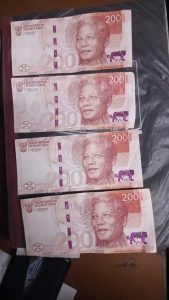
Sources close to the investigation reveal that the fake money was discovered during a routine cash counting process at Shoprite’s Polokwane branch. Initially, cashiers noticed irregularities in several R100 and R200 banknotes. Upon closer inspection, the notes lacked the standard security features embedded in genuine currency—most notably the watermark, the raised printing, and the security thread.
When store management escalated the matter, it was quickly confirmed that approximately R75,000 worth of the cash received was counterfeit. The South African Police Service (SAPS) was immediately alerted, and a criminal investigation is now underway to identify the suspects and trace the origin of the fake money.
What Is Counterfeit Money?
Counterfeit money refers to imitation currency produced without the legal sanction of the government or central bank. Its primary goal is to deceive recipients into believing it is real, enabling criminals to steal goods, services, or genuine money.
In this case, the fake cash was skillfully made but still inferior to authentic currency. Many counterfeiters now use advanced printers and inks that can replicate the look of genuine notes, but they often fall short when subjected to physical or ultraviolet security checks.
Impact on the Retail Sector
Retailers such as Shoprite, especially high-traffic stores like the one in Polokwane, are particularly vulnerable to counterfeit currency because of their high volume of daily transactions. Shoprite Group is one of South Africa’s largest retail chains, processing thousands of cash payments every day.
When fake money is accepted:
Retailers suffer direct financial loss because counterfeit cash has no value and cannot be exchanged at banks.
Inventory is lost because fake money is used to purchase real products.
There’s a loss of customer trust if businesses are seen as vulnerable to criminal schemes.
Internal systems may have to undergo expensive upgrades to better detect counterfeit notes.
High CPC Keywords Section – Protecting Your Business from Fake Money
For business owners, especially in high-risk cash sectors, there are important steps to follow to guard against counterfeit scams. Below are some high CPC keywords integrated tips to help protect your enterprise:
1. Fake Money Detection Tools for Retailers
Invest in counterfeit detection machines that analyze:
Ultraviolet (UV) markings
Magnetic ink
Infrared light patterns
Watermark verifications
These tools are crucial for high-volume cash businesses like supermarkets, fast food outlets, and filling stations.
2. How to Spot Fake R100 and R200 Notes
The most commonly faked banknotes in South Africa are:
R100
R200
Tips for spotting counterfeit bills:
Check the watermark: Genuine notes have a portrait watermark of Nelson Mandela.
Feel the texture: Authentic notes are printed with raised ink, especially around the denomination and the image.
Tilt the note: Security threads and color-changing inks appear only on real notes.
Use a UV light: Counterfeit money often lacks proper UV markings.
3. High-Risk Industries for Counterfeit Currency Circulation
Industries prone to fake money include:
Retail stores (especially supermarkets and corner shops)
Informal trade (street vendors, taxi ranks)
Fuel stations
Entertainment venues (clubs, bars)
Mobile cash services (spaza shops, mobile vendors)
These sectors are strongly encouraged to train staff in cash-handling best practices.
Law Enforcement Response and Community Engagement
After the fake currency was discovered, SAPS launched a full-scale investigation. According to insiders, closed-circuit television (CCTV) footage from the Shoprite store is being analyzed to identify the suspects who may have used the counterfeit cash. Authorities are also coordinating with the South African Reserve Bank (SARB) to determine whether this is an isolated case or part of a larger counterfeit money syndicate operating in Limpopo or nationwide.
Police have encouraged citizens to report suspicious notes or transactions and have urged retailers to review security footage and alert authorities if they notice repeated transactions involving large cash purchases.
Economic Impact of Counterfeit Currency in South Africa
The infiltration of fake money into the economy has serious consequences. The circulation of counterfeit cash devalues the real currency, leading to:
Inflationary pressure
Erosion of public trust in the banking system
Loss of income for small businesses
Higher operating costs due to additional verification measures
Furthermore, counterfeit crimes contribute to broader organized crime networks, which can include money laundering, drug trafficking, and identity fraud.
Expert Advice: What to Do If You Encounter Counterfeit Cash
If you suspect you’ve received a fake note:
Do not return it to the giver.
Take the note to your nearest police station or the South African Reserve Bank.
Provide as much information as possible: where and when you received it, from whom, and under what circumstances.
Avoid confrontation if the person is still nearby—your safety comes first.
Warning for Consumers: Don’t Get Caught With Fake Money
Individuals found in possession of fake currency can be charged with fraud, even if they claim they did not know the money was fake. It is critical to always inspect notes when receiving change, especially for high-value denominations like R200.