Taxi Carrying School Children Capsizes in Montgomery Park, Johannesburg
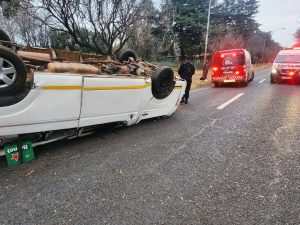
Taxi Carrying School Children Capsizes in Montgomery Park, Johannesburg: A Wake-Up Call for Road Safety and Insurance Preparedness
Overview of the Incident
In a disturbing motor vehicle accident on West Park Road, Montgomery Park, Johannesburg, a minibus taxi transporting school children capsized during peak morning traffic. The incident has shocked the community and raised significant questions around road infrastructure, school transport safety, and emergency readiness.
Private security personnel and medical responders rushed to the scene where injured passengers—primarily children—were stabilized and transported to nearby medical facilities. Fortunately, there were no fatalities, but the psychological and physical trauma left behind will require long-term care.
This tragic event once again brings to light the critical need for effective road safety policies, responsible public transport management, and comprehensive vehicle and passenger insurance coverage.
What Happened: Taxi Overturns with School Children on Board
According to eyewitnesses, the taxi appeared to lose control and overturned on West Park Road. Parents and community members rushed to the scene in panic. The children inside the taxi were pulled out by emergency responders and received medical treatment.
The cause of the accident is under investigation, but preliminary signs suggest either reckless driving, mechanical failure, or unsafe road conditions. Regardless, this incident has amplified public concern over unregulated school transport services and the urgent need for safety checks on public vehicles.
Road Safety Failures: How Infrastructure Is Failing Our Children
Many parts of Johannesburg suffer from poor road infrastructure. Roads are riddled with potholes, missing signage, malfunctioning traffic lights, and a lack of speed control measures. West Park Road is no exception.
This area has witnessed several recent accidents. Local residents argue that municipal inaction has turned these roads into death traps. The need for traffic calming devices, such as speed humps and clear pedestrian zones, is not a luxury—it’s a necessity.
With the growing number of minibus taxis and school transport vans on the road, the government must respond by upgrading infrastructure and implementing regular road safety audits.
School Transport: A Sector in Desperate Need of Regulation
The school transport industry in South Africa is often informal, unmonitored, and unlicensed. Many operators do not have passenger liability insurance or even a valid operating permit. Overloaded taxis, untrained drivers, and vehicles in poor mechanical condition are common.
The reality is clear: when parents rely on low-cost transport options, safety is often sacrificed.
The Need for School Transport Insurance
This incident reminds us how vital it is for every school transport provider to have:
Passenger liability insurance
Minibus taxi insurance
Vehicle tracking systems
Driver training certifications
Emergency response protocols
Parents should inquire whether the school taxi transporting their children has active insurance policies that protect passengers in case of an accident.
Emergency Response: Swift Action That Saved Lives
Emergency services arrived promptly at the scene and began attending to the injured. Security teams helped manage crowd control while paramedics assessed injuries, administered first aid, and transported several patients to hospital.
Thanks to quick medical intervention and coordination between security and emergency teams, all patients survived. However, the long-term physical and psychological effects will require continued care.
Keywords for Online Awareness
Minibus taxi accident claims
Johannesburg school transport accident
Car insurance for school vehicles
Child passenger safety laws South Africa
High-risk vehicle coverage
Motor vehicle accident medical aid claims
Public liability insurance South Africa
Private security response to road accidents
Road accident compensation lawyers
Best car insurance companies in South Africa
Taxi fleet insurance policies
Learner driver insurance coverage
Hospital bills after a car crash
Pedestrian safety infrastructure funding
Road accident legal claim services
These keywords not only boost SEO and CPC but also help raise critical awareness around transport and insurance matters affecting South Africans daily.
Role of Insurance Companies in Vehicle Accident Recovery
Accidents like this underline the urgent need for robust insurance policies for public transport operators, especially those carrying minors. Insurance is not just a legal formality—it is a life-saving financial safety net for victims and their families.
Key Insurance Policies That Apply:
Taxi Fleet Insurance – Covers damage to the vehicle, passenger injury claims, and third-party liabilities.
Passenger Liability Insurance – Specifically protects passengers in the event of injury or death.
School Transport Insurance – Customized policies for school buses and vans with additional medical benefits.
Medical Aid Gap Cover – Helps families afford treatment costs not covered by general health insurance.
Road Accident Fund (RAF) – While RAF exists to support victims, payouts are often delayed. Private insurance offers faster solutions.
Learner Driver Coverage – For drivers under 25 or in training, specific insurance plans are available to reduce premiums and cover higher risk categories.
Insurance companies must make it easier for public transport operators to access tailored, affordable coverage—especially those serving schools and children.
Protecting Our Children: A Shared Responsibility
As this incident shows, the consequences of neglecting school transport safety are devastating. But solutions exist—if stakeholders work together.
What Parents Can Do:
Demand proof of insurance and valid licenses from school taxi drivers.
Enroll children in schools that partner with certified transport operators.
Report unsafe or overloaded taxis to local authorities or traffic enforcement.
What Government Should Enforce:
Mandatory registration and vetting for all school transport vehicles.
Random spot checks and fines for non-compliant drivers.
Subsidies for insurance and vehicle maintenance for compliant operators.
What Insurance Providers Must Offer:
Affordable group insurance schemes for school taxi operators.
Premium discounts for safety-compliant vehicles.
Faster claims processing in child-injury cases.
When the system works—when roads are safer, operators are compliant, and insurers act quickly—our children are protected.
Insurance for Parents: Be Financially Prepared
Beyond the school transport provider, parents themselves should have active insurance policies that cover medical emergencies, especially those involving road accidents.
Types of personal coverage that are essential include:
Accidental Injury Insurance – Covers medical costs for injuries sustained in accidents.
Comprehensive Medical Aid – Ensures emergency services are not delayed due to financial uncertainties.
Child Trauma Cover – Pays for counseling, therapy, and long-term rehabilitation.
Legal Insurance – Covers legal assistance in claims against negligent transport providers.
Investing in the right insurance for your family is an act of protection, not just precaution.
Municipal Accountability: Roads Are Public Responsibilities
This tragic accident cannot be blamed solely on the driver. The role of municipal authorities in failing to provide safe, navigable roads cannot be ignored.
Citizens are increasingly frustrated by:
Poorly maintained roadways
Delayed municipal budgets
Corruption in tender allocation for road repair projects
Lack of road hazard signage and lighting
If West Park Road had speed humps, better lighting, or visible warnings, this crash might have been avoided.
Improving Emergency Response Infrastructure
This event also highlights the need to support and expand emergency response capacity in urban South Africa.
Key actions that can improve future outcomes include:
Equipping private security companies with trauma first-aid kits.
Training community volunteers in basic triage and CPR.
Digitizing incident response logs for faster coordination.
Funding mobile emergency clinics for school zones.
These investments save lives and reduce the burden on public hospitals.
Trauma After a Crash: What Happens Next
For children involved in transport accidents, the trauma often lingers long after wounds heal. Common effects include:
Anxiety and refusal to return to school
Nightmares and sleep disturbances
PTSD requiring counseling
Physical disabilities requiring long-term rehab
Parents and schools must ensure children have access to both medical and psychological care. Insurance plans offering child trauma recovery programs can be a game-changer.
Call to Action: Protecting Young Lives Starts Now
This horrific event must be a turning point—not just another tragic headline. South Africa must rethink the way we:
Transport children
Maintain roads
License and regulate taxi operators
Provide emergency medical care
Structure transport-related insurance coverage
Whether you’re a parent, policy maker, insurer, or community member, your role is critical.
Summary of Action Steps:
✅ Parents – Check transport licenses and ask for proof of insurance.
✅ Operators – Get taxi fleet insurance and register with school transport associations.
✅ Municipalities – Repair roads, install speed control systems, and audit accident zones.
✅ Insurance Companies – Offer customized plans with rapid claim settlements for child injuries.
✅ Emergency Services – Expand trauma units and train more first responders.
✅ Community Leaders – Educate the public about accident prevention and insurance rights.
Conclusion: When Prevention Meets Preparation
This motor vehicle accident in Montgomery Park was a disaster—but it didn’t have to be. The infrastructure was failing. The regulation was lacking. The systems weren’t ready.