Iran Considers Allowing Oil Tankers Through Hormuz Only if Trade Is Done in Chinese Yuan
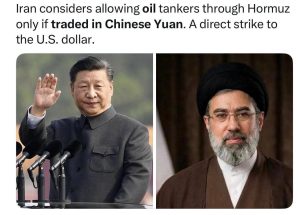
Iran Considers Allowing Oil Tankers Through Hormuz Only if Trade Is Done in Chinese Yuan
Introduction
A dramatic development in global energy politics has emerged as Iran considers allowing oil tankers to pass through the strategic Strait of Hormuz under one major condition: the oil cargo must be traded in Chinese yuan rather than the US dollar. The proposal has captured global attention because it directly challenges the long-standing financial structure that dominates international oil trading.
The Strait of Hormuz is one of the most critical maritime energy corridors in the world, carrying a significant portion of global crude oil exports and liquefied natural gas shipments. Any change in how oil shipments move through this route can have profound consequences for energy markets, commodity trading, global shipping logistics, and financial systems.
If implemented, Iran’s proposal could reshape international oil trading, influence currency markets, and accelerate ongoing debates about the future of the global energy economy.
Strategic Importance of the Strait of Hormuz
The Strait of Hormuz sits between Iran and the Arabian Peninsula and serves as the main maritime passage linking the Persian Gulf with international waters. It is widely considered the most important oil shipping route in the world.
Every day, millions of barrels of crude oil pass through this narrow waterway, connecting major energy exporters with global markets. Oil-producing countries in the Gulf region rely heavily on the strait to export petroleum products to Asia, Europe, and other major markets.
Energy analysts estimate that nearly one-fifth of global oil consumption flows through the corridor. Any disruption to this route has immediate consequences for global energy supply, commodity pricing, and international shipping operations.
Because of its strategic importance, the strait has long been at the center of geopolitical tensions involving regional powers, global energy companies, and international financial markets.
Iran’s Proposal: Oil Tankers Allowed With Yuan Transactions
According to recent reports, Iran is considering allowing a limited number of oil tankers to transit the Strait of Hormuz provided the oil cargo is traded using China’s currency rather than the US dollar.
The move would mark a major shift in the global oil trade system.
For decades, international oil transactions have been priced and settled primarily in US dollars. This system, often referred to as the petrodollar framework, has been a cornerstone of global energy markets and international finance.
By proposing yuan-based oil transactions, Iran appears to be exploring a financial strategy that could reduce dependence on dollar-based settlement systems while strengthening economic ties with China.
Energy economists say such a policy could introduce a new dynamic into international commodity markets.
The Rise of Yuan-Based Energy Trade
China has long expressed interest in expanding the international use of its currency in global trade. Over the past decade, Beijing has pursued various initiatives aimed at increasing the role of the yuan in international financial transactions.
These initiatives include:
Oil futures contracts priced in yuan
Bilateral trade agreements with emerging economies
Cross-border payment systems independent of Western financial networks
Strategic partnerships with major energy exporters
Iran’s proposal could accelerate this trend by encouraging oil buyers to conduct transactions using China’s currency.
If large volumes of oil begin trading in yuan rather than dollars, global energy markets could experience a gradual shift in the balance of financial power.
Impact on Global Oil Markets
Oil traders across global financial markets are closely monitoring the situation.
Any change in shipping rules through the Strait of Hormuz could influence crude oil prices, energy supply chains, and commodity market volatility.
Energy analysts say the introduction of yuan-based oil trading could create multiple price benchmarks in the global oil market.
Currently, most oil pricing relies on major benchmarks such as Brent crude and West Texas Intermediate. However, a growing share of yuan-denominated oil contracts could create a new financial structure for energy trading.
Such developments may also influence global hedge funds, commodity traders, and energy investment firms.
Energy Security and Global Supply Chains
The potential policy shift also highlights broader concerns about energy security.
Countries that rely heavily on Middle Eastern oil imports may need to adapt to new payment structures if they wish to maintain access to supply routes passing through the Strait of Hormuz.
Asian economies in particular may be affected because they represent the largest buyers of Gulf-region crude oil.
China, India, Japan, and South Korea depend heavily on oil shipments from the Persian Gulf to sustain industrial production and economic growth.
Changes in how oil shipments are financed or transported could therefore reshape international energy supply chains.
The Petrodollar System Under Pressure
Since the 1970s, the US dollar has dominated global oil transactions. The system emerged when major oil producers began pricing crude oil exports exclusively in dollars.
This arrangement created a strong link between global energy markets and the US financial system.
Because countries needed dollars to purchase oil, demand for the currency remained strong across global financial markets.
However, several geopolitical developments in recent years have raised questions about whether the petrodollar system could face increasing competition.
Iran’s proposed yuan-based shipping policy represents one of the most direct challenges to this financial structure.
China’s Role in the Global Energy Market
China is currently the world’s largest importer of crude oil, purchasing millions of barrels per day to support its industrial economy.
Beijing has invested heavily in securing long-term energy supply agreements with producers across the Middle East, Africa, and Central Asia.
Iran has become an important supplier in this strategy.
Recent shipping data indicates that millions of barrels of Iranian crude have already been exported to China despite regional tensions affecting the Strait of Hormuz.
This strong energy partnership provides an incentive for both countries to explore alternative financial arrangements for oil transactions.
Shipping Industry Reactions
Global shipping companies and tanker operators are closely evaluating the potential impact of the proposed policy.
The Strait of Hormuz has already experienced disruptions due to regional conflict, and shipping traffic has slowed significantly in recent weeks.
Some shipping companies have temporarily avoided the region due to security risks and rising insurance costs.
If Iran implements a yuan-based passage system, tanker operators may face new contractual requirements related to payment structures, currency settlement, and trade documentation.
These changes could influence freight rates, shipping insurance premiums, and maritime logistics strategies.
Commodity Trading and Energy Investment
Commodity trading firms play a major role in global oil markets, acting as intermediaries between producers and buyers.
Companies involved in crude oil trading must constantly monitor geopolitical developments that influence supply routes and pricing mechanisms.
A shift toward yuan-denominated oil transactions could lead to:
New commodity trading platforms
Currency hedging strategies
Cross-border financial partnerships
Expanded Asian energy trading hubs
Financial institutions that specialize in energy derivatives, commodity financing, and global trade banking may also adjust their investment strategies in response to these developments.
Financial Markets and Currency Competition
Currency markets may also experience ripple effects if large volumes of oil trade begin shifting away from the US dollar.
The US dollar has historically benefited from its role as the primary currency for international energy transactions.
If oil trading becomes increasingly diversified across multiple currencies, global foreign exchange markets may see new competitive dynamics.
Some analysts believe such changes could encourage greater financial cooperation among emerging economies seeking alternatives to traditional dollar-based trade systems.
However, others argue that the dollar’s deep liquidity and global trust make it unlikely to lose dominance in the near future.
Geopolitical Implications
The proposed policy also carries major geopolitical implications.
Energy resources have long been used as tools of economic influence and strategic leverage.
By linking tanker passage through a critical energy corridor to a specific currency, Iran could gain additional bargaining power in global economic negotiations.
The move could also strengthen alliances among countries seeking to reshape the international financial order.
At the same time, it may increase tensions with nations that view the policy as an attempt to challenge existing global trade frameworks.
Potential Impact on Oil Prices
Any disruption or restructuring of oil supply routes tends to trigger volatility in global energy markets.
Traders closely monitor shipping activity through the Strait of Hormuz because even small disruptions can influence oil prices worldwide.
If the proposed yuan-based trading condition leads to reduced tanker traffic or delays in shipments, global oil prices could experience short-term fluctuations.
Energy analysts also note that speculation in commodity markets often amplifies price movements during geopolitical crises.
The Future of Global Energy Trade
The situation surrounding the Strait of Hormuz highlights the fragile balance between energy security, financial systems, and geopolitical strategy.
As global demand for energy continues to grow, countries are increasingly exploring new ways to secure reliable supply chains and diversify financial partnerships.
Technological advances, renewable energy investments, and evolving financial networks are already reshaping the global energy landscape.
Iran’s proposal adds another layer to this transformation by linking shipping access to currency policy.
Conclusion
Iran’s consideration of allowing oil tankers through the Strait of Hormuz only if oil cargo is traded in Chinese yuan represents a significant moment in the intersection of energy politics, global finance, and international trade.
The proposal reflects broader shifts in geopolitical alliances, currency competition, and the strategic importance of maritime energy corridors.
While it remains uncertain whether the policy will be fully implemented, the discussion alone has sparked intense debate among governments, investors, and energy analysts around the world.
The Strait of Hormuz continues to stand at the center of global energy markets, and decisions affecting this vital waterway will likely influence the future direction of international oil trading, currency systems, and economic power in the decades ahead.