- Posted on
- by ADMIN
Septuagenarian “Granny” Arrested for Drug Dealing and Stolen Police Radio: A Deep-Dive into an Unusual Case
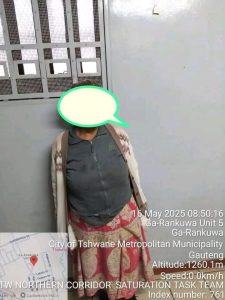
Introduction
On the morning of May 16, 2025, residents of the Mabopane township in Tshwane woke to startling news: a 79-year-old foreign national—affectionately known in her community as “Granny Maria”—had been detained by the South African Police Service (SAPS) on charges of drug possession and distribution, as well as for unlawful possession of a stolen police radio. The arrest of an elderly woman in her late seventies sent shockwaves through both local neighbourhoods and national headlines, prompting urgent questions about the evolving tactics of criminal networks, the vulnerabilities of migrant communities, and the security of critical police equipment.
This article explores every facet of the case—from the circumstances of Granny Maria’s arrest to the broader socio-legal implications—offering a comprehensive, approximately 2,500-word examination of how and why one of the nation’s most unlikely suspects came to stand accused of such serious offences.
1. The Arrest: How Granny Maria Was Taken Into Custody
Shortly before dawn on May 16, SAPS officers from the Mabopane Tactical Response Team executed a search warrant on a modest, single-room dwelling behind a row of informal traders in Block C. Acting on an anonymous tip that a foreign national was allegedly distributing narcotics to youth in the area, officers found Granny Maria—born Maria Kouassi in Côte d’Ivoire—awake and quietly preparing tea. During the search, police discovered:
Multiple Sachets of Drugs: Approximately 50 small, individually wrapped packets containing a white powder, later confirmed by forensic analysis to be methaqualone (commonly known as “mandrax”) and small quantities of cannabis.
Stolen Police Radio: A digital handheld radio, stamped with the emblem and serial number of the Tshwane North SAPS station, tucked inside a worn handbag.
Maria was arrested on the spot and taken to the Mabopane police station, where she was formally charged under the Drugs and Drug Trafficking Act (1992) and the Prevention of Organised Crime Act (1998) for possession with intent to distribute and unlawful possession of police property. Her case was remanded to the Soshanguve Magistrate’s Court, with arguments over bail scheduled for May 24.
2. A Profile of Granny Maria
At 79, Maria is hardly the image of a hardened dealer. Social workers and neighbours describe her as soft-spoken, prudent, and devoutly religious, having led prayer meetings in her home and cooked for children in her makeshift church group. She arrived in South Africa over two decades ago as a domestic worker and—after initially facing the precarious status of many migrants—eventually applied for permanent residency. She has three surviving children, all of whom emigrated to Europe or North America, leaving her alone in Mabopane.
Despite her age and solitary circumstances, investigators allege that Maria became entangled with a criminal syndicate that exploited her perceived “invisibility.” They claim she served as a low-risk courier: her routine movements between the informal settlement and nearby taxi ranks allowed her to transport small quantities of drugs undetected, and her advanced age disarmed suspicion from passersby and law enforcement alike.
3. The Nature of the Drugs: Mandrax and Cannabis
Mandrax (methaqualone) remains one of South Africa’s most persistent illicit substances, prized for its sedative and euphoric effects. Although banned since the 1980s, it continued to be manufactured in clandestine labs before being smuggled in or synthesized domestically. Cannabis, by contrast, has become widely prevalent, with evolving legislation introducing medical and private-use allowances, though unlicensed sale remains illegal.
Forensic reports indicate that Granny Maria’s stash included roughly 25 grams of mandrax—enough for several dozen small doses—and about 15 grams of dried cannabis. Police allege that she priced mandrax doses at R20 each and cannabis at R50 per gram, generating modest profits that she purportedly used to fund her basic living expenses.
4. The Stolen Police Radio: A Breach of Trust
Equally baffling was the discovery of a police-issued, encrypted digital radio normally used by officers on patrol. The radio’s serial number matched equipment signed out by a constable at the Tshwane North station nearly three weeks earlier. An internal SAPS audit has since revealed:
Lapse in Chain of Custody: The radio went missing during a shift handover, and no formal inventory check was conducted.
Potential Insider Facilitation: Preliminary interviews suggest that an officer may have inadvertently—or willfully—allowed the device to be removed from station premises without proper logging.
Possession of stolen government property carries severe penalties under South African law, with potential imprisonment of up to 15 years. For Granny Maria, already facing drug charges, the addition of police equipment theft complicates her defense and amplifies prosecutorial zeal.
5. Community Reaction: Shock, Sympathy, and Outrage
News of the arrest rippled through Mabopane and beyond. Reactions varied:
Local Traders: Many expressed disbelief that “Granny,” who operated a small tea stall outside her room, could be involved in drug peddling. A neighbouring vendor, Ms. Naledi, remarked, “Maria is like a mother to us all. She prays with us. How could she do this?”
Youth in the Settlement: Several adolescents who attended her prayer meetings posted messages of confusion and betrayal on social media.
Civil Society Groups: Migrant advocacy NGOs warned against conflating age and nationality with criminality. The Migrant Rights Network issued a statement urging that the elderly and vulnerable not be scapegoated.
Law Enforcement Circles: Police officials acknowledged embarrassment over the stolen radio but defended the operation, insisting that criminal networks will exploit any “soft target,” including seniors.
6. Elderly Involvement in the Drug Trade: A Growing Trend?
While most drug arrests involve young adults, there is mounting evidence that organised crime groups are increasingly recruiting older individuals:
Perceived Innocence: Seniors are less likely to be searched or suspected, allowing small-scale trafficking to pass under the radar.
Reduced Sentencing Risk: Some syndicates calculate that courts and juries may show leniency to the elderly, or that health conditions may preclude long custodial sentences.
Economic Exploitation: Financial desperation among elderly migrants—often excluded from social grants or pensions—can make them receptive to offers of easy money.
Criminologist Dr. Aisha Mdletshe of the University of Pretoria explains, “Networks evolve. They identify that a 79-year-old grandmother garners less suspicion than a 25-year-old male. It’s a pernicious tactic that preys on societal biases.”
7. Legal Context: Charges, Bail, and Potential Sentences
Maria faces three principal charges:
Possession of a Schedule 6 Substance (Cannabis) with Intent to Distribute
Possession of a Schedule 0 Substance (Mandrax) with Intent to Distribute
Possession of Stolen Government Property (Police Radio)
Under South African statutes, counts 1 and 2 can each attract up to 15 years’ imprisonment if convicted, though sentencing guidelines consider quantity, prior record, and mitigating factors (such as age and health). Charge 3—possession of stolen police property—also carries a maximum of 15 years. Combined, Maria could conceivably face decades in prison, though in practice, concurrent sentencing and judicial discretion might reduce her term.
Her legal team has applied for bail on grounds of her advanced age, lack of prior convictions, and health concerns (she reportedly suffers from hypertension and arthritis). The prosecution opposes bail, citing flight risk (no fixed residency documents) and the seriousness of the alleged offences. The bail hearing at Soshanguve Magistrate’s Court will be pivotal.
8. Immigration Status and Vulnerability of Migrant Granny
Maria’s status as a non-citizen complicates matters. Although she applied for permanent residency in 2018, bureaucratic delays have left her without an official permit. If convicted, she faces not only imprisonment but likely deportation proceedings—a prospect that has horrified her friends, who worry about her ability to access healthcare and housing back in Côte d’Ivoire.
Migrant-rights lawyer Thandi Peters argues that the case highlights systemic failures: “When elderly migrants lack social protection or legal status, they become easy prey for criminal networks—and have no recourse when caught. We must improve legal pathways and support services for vulnerable migrants.”
9. Policing and Equipment Security: Lessons for SAPS
The theft of a digital police radio from a secure station locker has prompted an urgent internal review within SAPS:
Inventory Protocols: Reinstate strict sign-in/out checklists at every shift change, with digital logs and mandatory hand-over sign-offs.
Staff Training: Ensure all officers understand the legal and operational implications of unaccounted equipment.
Technology Solutions: Consider GPS-enabled or RFID-tagged devices to alert headquarters if removed from designated zones.
National Police Commissioner insisted in a statement that the breach was “unacceptable” but stressed that over 95% of SAPS assets are accounted for annually, framing the incident as an outlier rather than endemic negligence.
10. Social and Policy Implications
This case raises broad questions:
Elder Abuse vs. Criminal Agency: How do we differentiate at-risk seniors coerced into crime from genuinely culpable offenders?
Border Controls and Migrant Integration: Are current immigration processes creating a shadow population vulnerable to exploitation?
Harm Reduction and Community Policing: Should law enforcement partner with NGOs to provide social support rather than defaulting to punitive measures, especially for elderly suspects?
Security of Law Enforcement Assets: Beyond radios, what other equipment—firearms, body cams, laptops—might be similarly at risk?
Policy experts suggest that a multi-agency task force involving Home Affairs, SAPS, Department of Social Development, and civil society could address these intersecting challenges, ensuring that vulnerable individuals receive social interventions before criminal charges.
11. Expert Commentary
Professor Lesego Molefe, Criminology (UNISA):
“The adaption of criminal enterprises to use elderly couriers is deeply concerning. It not only exploits ageism in policing but also distorts our understanding of offender profiles. We must train officers to recognize that age alone is not a protective indicator.”
Dr. Pieter van der Walt, Geriatric Psychologist:
“An elderly person’s foray into crime often signals underlying issues—loneliness, poverty, mental health struggles. Arresting them addresses the symptom but not the cause. Diversion programs for seniors could be more humane and effective.”
Advocate Nomsa Khumalo, Legal Aid South Africa:
“From a legal standpoint, bail and sentencing must balance public safety with compassion. A 79-year-old woman with chronic health conditions requires custodial alternatives—house arrest or monitored social support—to avoid undue harm.”
12. Comparative Cases: International Perspectives
Similar arrests of elderly drug couriers have surfaced elsewhere:
Spain (2023): An 82-year-old grandmother was detained carrying cocaine across the Pyrenees, allegedly coerced by local gangs.
Brazil (2024): An 80-year-old man found transporting crack cocaine was later diagnosed with dementia, prompting debate over mental capacity and criminal intent.
Comparative studies show that while some jurisdictions offer elder diversion courts, South Africa currently lacks specialized mechanisms for senior offenders, underscoring the need for reform.
13. The Road Ahead for Granny Maria
As the legal process unfolds, key questions loom:
Will bail be granted? A decision on May 24 could determine whether Maria awaits trial at home under strict conditions or remains in police custody.
Will prosecutors offer a plea bargain? Given her age and the modest drug quantities, the state may propose a reduced charge in exchange for community service or a restorative-justice program.
Will civil society intervene? NGOs may lobby for her release into a supervised care arrangement rather than prison, emphasizing her health needs.
Maria’s case will likely set precedent: how courts handle elderly foreign nationals accused of non-violent offences and whether South African justice can reconcile accountability with compassion.
14. Conclusion
The arrest of 79-year-old Granny Maria for drug dealing and possession of a stolen police radio is more than a sensational headline. It illuminates the evolving strategies of organised crime, the precariousness of migrant populations, and weaknesses in police asset security. It also challenges us to question our assumptions about age, culpability, and the role of social support in preventing crime.
As South Africa grapples with high crime rates and persistent inequality, the case underscores that effective justice must extend beyond arrests—it must address root causes, protect vulnerable individuals, and safeguard the very institutions dedicated to public safety. Granny Maria’s trajectory from prayer-leader to defendant compels a national reckoning: are our systems robust and humane enough to serve justice for all, regardless of age or origin?
The coming weeks will reveal not only Maria’s fate but also South Africa’s capacity to adapt its laws, policies, and social frameworks to an ever-changing criminal landscape—one where even the most unlikely suspects may become entangled, and where compassion must inform accountability.