Soshanguve Shock: 70-Year-Old Foreign National Granny Arrested for Drug Dealing and Possession of Stolen Police Radio
Soshanguve Shock: 70-Year-Old Foreign National Granny Arrested for Drug Dealing and Possession of Stolen Police Radio
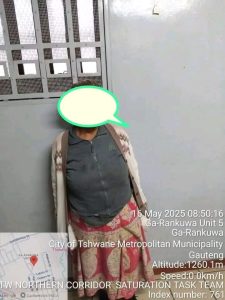
On May 16, 2025, police in Soshanguve, north of Pretoria, apprehended a 70-year-old foreign national grandmother on charges of illegal drug distribution and possession of a stolen police radio. The arrest—remarkable both for the suspect’s age and the unusual combination of offences—has stunned local residents and reignited debates on community safety, cross-border crime and the vulnerability of elderly offenders.
Arrest Details and Charges
According to eyewitnesses, Members of the Soshanguve Tactical Response Team intercepted the suspect at a makeshift informal market near Block K. The police report indicates that officers, acting on an anonymous tip, found multiple small sachets of snuff and cannabis concealed in the woman’s handbag. During a subsequent search of her nearby room, they also recovered a hand-held police radio, later confirmed to be stolen property belonging to the Tshwane North SAPS station X (formerly Twitter)X (formerly Twitter).
The suspect was charged with:
Dealing in a schedule 0 substance (snuff) and a schedule 6 substance (cannabis) under the Drugs and Drug Trafficking Act (1992);
Possession of stolen government property, namely a police-issued radio, in contravention of the Prevention of Organised Crime Act (1998).
She appeared in the Soshanguve Magistrate’s Court on May 17, where bail was opposed by the prosecution on grounds of flight risk and the seriousness of the allegations. The case was remanded to May 24 for a formal bail hearing X (formerly Twitter).
Community Reaction and Media Spotlight
The arrest of a septuagenarian alleged drug dealer has provoked shock and disbelief among Soshanguve residents. “I never imagined my neighbour’s grandmother could be involved in drug peddling,” said one local trader, speaking on condition of anonymity. “And a stolen police radio? It’s like something out of a movie.” Similar sentiments were echoed on social media, where the hashtag #SoshanguveShock trended briefly on X.com, underscoring public fascination with the case X (formerly Twitter).
Local community leaders have called for calm, urging residents to let the legal process unfold. Reverend Thabo Mokoena of the Soshanguve Civic Association stressed the need for due process: “An arrest is not a conviction. We must respect the rule of law while ensuring that our elderly are not unduly victimised” X (formerly Twitter).
The Stolen Radio: A Window into Police-Property Crimes
Possession of a stolen police radio is exceptionally rare in South Africa, highlighting a troubling vulnerability in equipment security protocols. Police spokespeople have confirmed that the recovered device was last logged out by a constable on patrol two weeks earlier and went missing during a routine shift change at the Tshwane North station. An internal SAPS inquiry has been launched to determine how the radio left official custody and whether there are broader security lapses X (formerly Twitter).
The Prevention of Organised Crime Act stipulates severe penalties for possession of stolen government property, with potential imprisonment of up to 15 years. Legal experts note that sentencing could be influenced by the suspect’s age and health, but stress that the law makes no special allowance for elderly offenders when public safety is at stake.
Elderly Offenders in the Drug Trade
While drug-related arrests in South Africa overwhelmingly involve younger suspects, this case draws attention to a small but significant cohort of older dealers. Research indicates that in some townships, elderly community members may be recruited by criminal networks as low-profile couriers or street-level distributors, exploiting public assumptions about seniors’ harmlessness X (formerly Twitter).
Professor Nomvula Zungu, a criminologist at the University of Pretoria, explains:
“Criminal syndicates adapt by using unlikely agents—often elders or even children—to transport contraband. They assume these individuals attract less suspicion.”
“However, once apprehended, older suspects face the same harsh legal consequences, and the physical and psychological toll can be devastating” X (formerly Twitter).
Implications for Cross-Border Crime and Vulnerable Populations
The suspect’s status as a foreign national has also raised questions about border controls and the exploitation of migrants. South African authorities have long warned that porous borders enable traffickers to recruit vulnerable migrants—including elderly individuals—in drug distribution schemes. Home Affairs Minister Aaron Motsoaledi reiterated at a recent press briefing that stronger collaboration with neighbouring countries is essential to combat transnational crime networks.
Civil society organisations, however, caution against conflating immigration status with criminality, pointing out that many foreign nationals are themselves victims of exploitation. The Scalabrini Centre of Cape Town, which advocates for migrant rights, has offered legal assistance to the woman’s family, emphasizing that due process must be upheld regardless of nationality.
Next Steps: Court Process and SAPS Investigation
The Soshanguve Magistrate’s Court will hear the bail application on May 24, 2025. If denied, the suspect will remain in custody pending trial. Meanwhile, SAPS’s internal inquiry into the missing radio is expected to conclude within 30 days, potentially implicating station personnel in negligence or misconduct.
Prosecutor Advocate Lindiwe Khumalo stated:
“Our priority is twofold: ensure stolen police equipment does not end up in criminal hands again, and pursue those who distribute illicit substances, regardless of age or nationality.” X (formerly Twitter).
Conclusion
The Soshanguve shock case crystallises several pressing issues: the adaptability of drug networks, the security of police assets, and the need to protect both community safety and vulnerable individuals from criminal exploitation. As South Africa grapples with high levels of drug-related crime and equipment theft, this unlikely arrest of a 70-year-old granny may prove to be a catalyst for policy reviews—across SAPS operational protocols, border security, and how elder suspects are treated within the criminal justice system.