The US has checked out. Can Europe stop Putin alone?
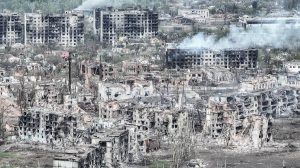
The United States was once Ukraine’s most important ally – supplying arms, funding and political cover as Kyiv fought for its sovereignty. But today, Washington is losing interest. President Donald Trump, more at home on the golf course than in a war room, is pulling away from a conflict he no longer seems to care to understand.
Trump has not hidden his disdain. He has echoed Kremlin narratives, questioned NATO’s relevance and reduced Ukraine’s defence to a punchline. Even his recent comment that Russian President Vladimir Putin has “gone absolutely crazy” does little to undo years of indulgence and indifference.
[09:07, 06/06/2025] +27 72 292 9983: He has not become a credible peace broker or a consistent supporter of Ukraine. His words now carry little weight – and Kyiv is paying the price.
Now Hiring: Store Manager – The FIX, Tzaneen (TFG Group)
Just last week, Ukraine launched what it called Operation Spiderweb, a coordinated series of drone strikes deep inside Russian territory. Dozens of aircraft were destroyed at airfields, and key military infrastructure was disrupted. The White House swiftly denied any US involvement. Trump responded by again threatening to “walk away” from the war.
Shortly afterwards, a second round of peace talks in Istanbul collapsed. The only agreement reached was a sombre one: the exchange of the remains of 6,000 fallen soldiers. That may help bring closure to grieving families – but it has done nothing to alter the course of the war.
Trump’s belated proposal – relayed by White House Press Secretary Karoline Leavitt – that he supports direct talks between Ukrainian President Volodymyr Zelenskyy and Putin sounded more like political theatre than diplomacy. The moment had already passed.
Shortly afterwards, a second round of peace talks in Istanbul collapsed. The only agreement reached was a sombre one: the exchange of the remains of 6,000 fallen soldiers. That may help bring closure to grieving families – but it has done nothing to alter the course of the war.

Trump’s belated proposal – relayed by White House Press Secretary Karoline Leavitt – that he supports direct talks between Ukrainian President Volodymyr Zelenskyy and Putin sounded more like political theatre than diplomacy. The moment had already passed.
[09:09, 06/06/2025] +27 72 292 9983: As of early 2025, Ukraine was meeting roughly 40 percent of its own military needs, according to the Centre for Security and Cooperation in Kyiv. Europe provided 30 percent and the US the remaining 30 percent. To sustain the fight, Europe must now do more – quickly.
The alternative would be disastrous. The Kiel Institute for the World Economy has estimated that if Russia were to occupy Ukraine, it could cost Germany alone 10 to 20 times more than maintaining current levels of support – due to refugee flows, energy instability, economic disruptions and defence risks.
One of Ukraine’s most urgent needs is ammunition – particularly artillery shells. Until recently, the US was the main supplier. As American deliveries decline, Ukraine is burning through its reserves. Europe is now scrambling to fill the gap.
The problem is scale. Europe’s arms industry has long been underdeveloped. It is only now beginning to respond. According to European Union Commissioner for Defence and Space Andrius Kubilius, the bloc aims to produce 2 million artillery shells annually by the end of 2025. This would just meet Ukraine’s minimum battlefield requirements.
A particularly ambitious initiative is a Czech-led plan to procure and deliver up to 1.8 million shells to Ukraine by the end of next year. Confirmed by Czech President Petr Pavel in May and backed by Canada, Norway, the Netherlands, Denmark and other countries, the effort is one of the few on track to make a meaningful impact – if it arrives on time
On May 20, one day after a reportedly warm call between Trump and Putin, the EU and UK unveiled their most sweeping sanctions package yet. It included nearly 200 vessels from Russia’s so-called shadow fleet, used to smuggle oil and circumvent global price caps.
Some estimates, including AI-assisted modelling, suggest the sanctions could cost Russia $10bn to $20bn per year if loopholes are closed and enforcement holds. Even partial implementation would disrupt Moscow’s wartime revenue.
EU foreign policy chief Kaja Kallas was clear: “The longer Russia wages war, the tougher our response.” Europe is beginning to back that promise with action.
From drones to shells, sanctions to weapons production, the continent is finally moving from statements to strategy – slowly but steadily building the foundations of Ukrainian resilience and Russian defeat.
But this momentum cannot stall. This is no longer just Ukraine’s war.
The US has stepped aside. Europe is no longer the backup plan. It is the last line of defence. If it fails, so does Ukraine – and with it, the idea of a secure, sovereign Europe